We investigate corruption, uncover fake news and analyze the news agenda. The BIC is a member of the global network of investigative journalists.
Our journalists have received theHans Staiger Investigative Award from the International Center for Journalists; the Free Media Award from the ZEIT-Stiftung Bucerius and the Fritt Ord Foundation; and the Data Journalism Award from the Society for Advancing Business Editing and Writing. Our Dubai Unlocked project was also shortlisted for the Sigma Awards.
Between 2018 and 2026, our journalists received 11 Belarusian Volnaye Slova Awards.
BIC is a member of the OCCRP (Organized Crime and Corruption Reporting Project)
We are also members of GIJN (Global Investigative Journalism Network)
Moldova’s European integration: ONT myths of failure and facts about export growth
We checked whether Chisinau really lost trade positions after signing the agreement with the EU.
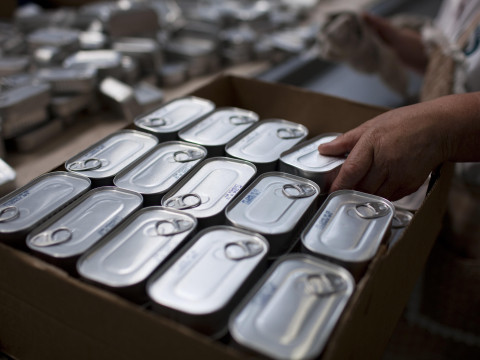
Moldova has struggled to sell its goods because Europe does not need them, said ONT TV channel head Igor Lutski, blaming the country’s turn toward European integration. Statistics showed he was wrong.
On the program "Contours," Lutski said that "our conscious ones, followed by the beet-heads," (referring to the opposition – translator's note) were mistaken when they "made grim forecasts about Belarus’ economy" because the country did not pursue European integration. Moldova did — and that was a mistake, the state TV host concluded on the Aug. 24, 2025, broadcast of ONT.
“Elections there are basically run from Brussels. Presidents are appointed, people are told how to live. Turning away from Russia led to sky-high natural gas prices. For a very poor country, this was a shock, but Chisinau did not back away from European integration. It also became hard to sell goods that turned out to be unwanted in Europe. They put up with that too,” Lutski concluded.
From 2014 to 2024, after signing the Association and Free Trade Agreements with the European Union, Moldova’s exports to the EU nearly doubled. Two-thirds of the country’s goods now go to Europe.
By comparison, Russia’s share of Moldova’s exports is just over 3 percent. In 2014, that share was about one-fifth. After signing the association agreement with the EU, Moldova’s total exports increased by one and a half times, reaching $3.5 billion by 2024.
By comparison, Belarus’ exports grew 12 percent over 10 years, but exports to the EU fell by half, mainly because of sanctions.