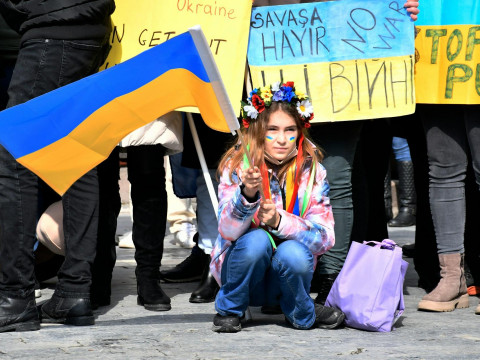


Three or four years ago, Poland was experiencing a peak of solidarity with Ukrainians and sympathy for Belarusians fleeing repression. Today, opinion polls show the opposite trend, and statistics record a rise in offenses motivated by hatred toward foreigners. This shift appears all the more paradoxical given that anti-migrant sentiment is not grounded in real facts. It is fueled by political rhetoric and disinformation, while the key accusations against Ukrainians and Belarusians are contradicted by official data.
“One of them asked whether I was Polish, another demanded that I show my ID, and when I refused, the first approached me with a large pepper spray canister and began spraying it,” — this is how a resident of the Polish city of Pruszków described to journalists his encounter with people wearing balaclavas and carrying baseball bats. On the evening of February 7, 2026, he went outside after hearing shouting and the sound of breaking glass. The man managed to escape from the attackers. Two Ukrainian women were less fortunate — they were beaten. One of the women reported the incident to the police. Over the next two days, law enforcement officers detained four Polish citizens: three men aged 50, 35 and 23, and a 45-year-old woman.
In Poland, the number of crimes motivated by hatred toward foreigners is rising. From January to July 2025, local police registered 543 offenses motivated by prejudice — 159 more than in the same period a year earlier. That is an increase of 41%. The number of attacks on Ukrainian citizens has grown particularly noticeably: as Onet reported, citing police statistics, over the past two years the number of threats against them has more than doubled, cases of insults targeting Ukrainians have risen by 70%, and attacks linked to nationality have increased by 66%.
Rising Anti-Migrant Sentiment
Public opinion polls in Poland show that attitudes toward migrants from Ukraine and Belarus have worsened in recent years. While at the beginning of the full-scale war the vast majority of Poles supported accepting Ukrainian refugees, that support later fell by half. According to the Polish Public Opinion Research Center CBOS (Centrum Badania Opinii Społecznej), in March 2022, 94% of respondents approved of accepting Ukrainians. By the autumn of 2025, this figure had dropped to a record low of 48%. The overall attitude toward Ukrainians also worsened. In 2023, 51% of Poles expressed sympathy for them, while 17% felt hostility. Three years later, the picture had almost reversed: in 2026, 29% of Poles view Ukrainians positively, while 43% view them negatively.
Belarusians are the second-largest group of foreigners in Poland after Ukrainians. For various reasons — primarily economic ones and fleeing repression after the mass protests of 2020 — more than one hundred thousand Belarusians moved to Poland (we discussed the reasons in more detail in the article “The Myth of Mass Political Emigration”). In 2021, CBOS recorded a record-high level of warmth toward them: 47% of respondents said they felt sympathy for Belarusians, while 17% expressed hostility. By 2026, the situation had changed: only 19% view Belarusians positively, while 46% view them negatively.
“Fuel for Elections”
Open hostility toward foreigners is being legitimized by Polish politicians, primarily those on the right and far right. Anti-migrant rhetoric has taken a prominent place in electoral campaigns. It was used by Karol Nawrocki, who won the presidential election in the summer of 2025. He, for example, stated that “Ukrainians should not live better in Poland than Poles,” and spoke of “signals that citizens who came here from Ukraine are creating problems in queues at hospitals and clinics.”
Sławomir Mentzen, a candidate from the Confederation Freedom and Independence party (Konfederacja Wolność i Niepodległość), who placed third in the presidential election, spoke in a similar vein. Among other things, he criticized the government, which, according to him, had allowed Ukrainians to “organize medical tourism for themselves at our expense.” At rallies organized by his party, participants chanted racist slogans. The main call at these events was “Stop immigration!”
The most radical statements regarding migrants have come from MEP and leader of the Confederation of the Polish Crown party (Konfederacja Korony Polskiej) Grzegorz Braun, who finished fourth. During the 2025 campaign, he stated (quote according to Gazeta Prawna):
“No tanks for Ukraine, no ‘800+’ (a state program providing a monthly payment of 800 zlotys per child — ed.) for Ukrainians, and no subsidizing Ukrainian pensioners.”
Migration expert Olena Babakova, in a comment to BIC, notes that migration has become “fuel for elections,” and that negative narratives are typically built around recurring themes — portraying migrants as a threat to security, a burden on the budget, or a source of wage dumping in the labor market.
“It is easier to explain the lack of reforms in the ZUS or NFZ systems (Poland’s Social Insurance Institution and National Health Fund — ed.) by migration than by structural problems and the shortcomings of the political class,” Babakova explains.

Networks of Lies, Fear, and Stereotypes
Anti-migrant sentiment in Poland is largely fueled by fake stories and manipulation spread on social media. According to a report by the Institute of Media Monitoring (Instytut Monitorowania Mediów) and the Demagog project, between April and July 2025 alone, 94,000 negative messages targeting Ukrainians and based on false narratives, fears, and stereotypes appeared in the Polish-language internet. Researchers estimate that these materials may have been viewed 32.5 million times. This means that virtually every Pole aged 15 or older could have encountered such content at least once. Over the entire year of 2024, researchers recorded nearly 327,000 similar publications in the Polish internet, with their total number of views exceeding 75 million.
One example of the spread of false information about migrants is a story published in November on social media by MEP Ewa Zajączkowska-Hernik from the Confederation Freedom and Independence party. In November 2025, she wrote that a patient had died in a clinic in Wrocław due to the incompetence of doctors from Ukraine and Belarus who did not speak Polish well. According to her, the medical staff administered the wrong medication, which caused a severe allergic reaction, and then failed to provide assistance or call an ambulance.
“We pay billions for healthcare, yet the NFZ is going bankrupt, departments are closing one after another, and Poles are increasingly treated by foreigners who do not even know Polish well enough. It is humiliating. How long will we, as a society, as an entire Nation, tolerate this?” Zajączkowska-Hernik complained.
On Facebook alone, the post had gathered about 17,000 reactions and more than 3,500 shares by the time of our publication. However, as the Demagog project established, the only true element of the story — which actually occurred back in 2023 — was that the man died of allergic shock. The family’s lawyer stated that the patient had suffered from bronchial asthma since childhood, and that the initial questionnaire did not include a question about this condition. There is no confirmation that the doctors were migrants. Moreover, the family’s lawyer said that there had been no problems with communication in Polish between the staff and the patient’s relatives.
Internal and External Hate
Anti-migrant narratives are often spread by users who run their accounts from outside Poland. After the platform X began displaying the approximate location of registered profiles in November, it turned out that some of them were operated from Belarus, the Netherlands, Norway, and other countries. However, such a label does not necessarily mean that the authors are physically located there. It is possible that they are posting from another country while using a VPN.
That anti-migrant narratives are fueled in part from outside Poland is also noted in a BBC investigation published in June 2025. Journalists identified a network of Telegram channels spreading anti-Ukrainian messages, 22 of them in Polish. These channels were interconnected: they reposted one another, cited the same sources, and published content in a similar style. Some of them featured outright fake information; others mixed factual details with false claims or omitted key context, creating a misleading impression. Content from such channels often became the starting point for further dissemination of disinformation: posts would migrate from Telegram to more popular platforms in Poland, such as X and Facebook.
Olena Babakova notes that anti-migrant narratives can have a cumulative effect, creating an atmosphere of distrust and threat:
“The goal of disinformation is not so much to make someone in the ‘center’ believe a hard-right version of events, but to make them start doubting everything they hear about migrants. ‘Maybe those who say they are freeloaders are wrong… but perhaps those who claim they pay taxes and support themselves are not telling the whole truth.’ This involves both domestic political games with the electorate and external negative influence: the issue strongly polarizes society and breeds distrust even toward fellow citizens who respect migrants. All it takes is to throw in a fake — and panic can be steered.”
Migrant Profile: A Criminal?
Right-wing politicians in Poland regularly link migration to rising crime. For example, in March 2025, one of the leaders of the Confederation Freedom and Independence party, Krzysztof Bosak, stated that “foreigners are responsible for every twentieth crime committed in Poland.”
“But pay attention: among those wanted for murder, they account for 40%,” the politician added.
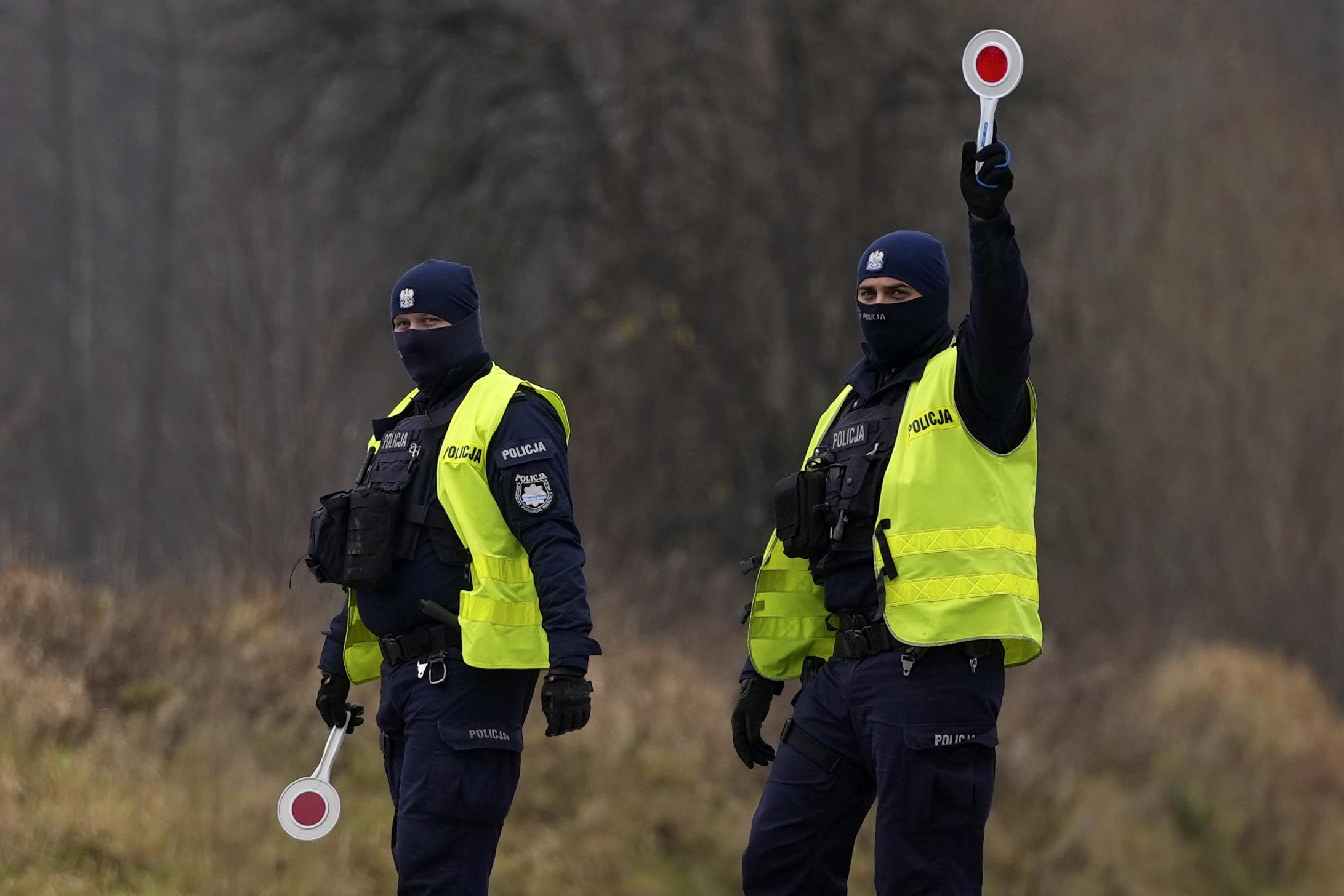
Official statistics contradict this claim. According to police data, in 2020–2024 migrants accounted on average for about 7% of suspects in homicide cases in Poland. Among all criminal suspects in 2024, foreigners made up 5%.
Moreover, migrants commit crimes less frequently than Polish citizens. According to the Institute of Justice (Instytut Wymiaru Sprawiedliwości), in 2023 there were 652 suspects per 100,000 foreign residents in Poland, compared to 810 per 100,000 Polish citizens.
If Ukrainian citizens are considered separately, the rate is roughly the same as the average for foreigners. According to the Polish Ministry of the Interior and Administration (MSWiA), in 2024 about 1.5 million Ukrainians were living in Poland, of whom 9,800 became suspects. This corresponds to approximately 653 suspects per 100,000 Ukrainians. Previously, BIC analyzed data from other European Union countries and likewise found no evidence supporting the claim that migrants and refugees from Ukraine drive up crime rates.
Among Belarusians, the figure is even lower. In 2024, there were about 306,000 legally residing Belarusian citizens in Poland, and only 1,122 of them became suspects. This equals 367 suspects per 100,000 Belarusians — nearly half the rate recorded among Polish citizens.
Migrant Profile: A Welfare Dependent?
Another common narrative claims that migrants live off benefits paid from Polish taxpayers’ money.
“Ukrainians live off the hard work of Poles. Anyone who has allowed this situation to happen is simply a traitor,” publicist and head of the Movement for the Defense of Poles (Ruch Obrony Polaków), Witold Gadowski, wrote on X in June 2025.
At the time of publication, the post had received about 2,000 likes and more than 400 shares.
Statistics show that the majority of Ukrainians and Belarusians in Poland are employed, and social benefits account for only a small share of their income. According to the National Bank of Poland (Narodowy Bank Polski), in 2025, 92% of Ukrainians who arrived before the full-scale war were employed, as were 75% of Ukrainian refugees. Among Belarusians, 87% are employed in one form or another. Social benefits make up only a small portion of migrants’ income: for Ukrainians, it is 9% (6% for those who arrived before the war and 12% for refugees). Among Belarusians, payments under the “800+” program account for just 5% of income.
Migrant Profile: Uneducated?
Moreover, many of those who moved to Poland are well educated. Among Ukrainians who arrived in Poland before the full-scale war, 42% have higher education, and among refugees who arrived after 2022, the figure is 43%. The share is even higher among Belarusians — 62% have higher education. For comparison, in Poland itself, 34.3% of the population has higher education, while the EU average is 31.7%.
Most migrants from Ukraine and Belarus have learned Polish. In 2022, 21% of Ukrainian refugees did not speak Polish, while 67% had only limited proficiency. By 2025, only 5% did not know the language, 42% spoke it at a basic level, and 53% spoke it well or fluently. Among Ukrainians who arrived before the war, the figure is even higher — 83% speak Polish well or very well. The results are similar for Belarusians: 63% speak the language well or fluently, and only about 1% do not speak Polish at all.
Olena Babakova explains that accusations against migrants often do not match the facts because the issue is easy to use for political purposes.
“It is a convenient image: by accusing migrants of abusing hospitality, citizens naturally ask fewer questions of those in power and of big capital,” she notes.
Thus, the real profile of migrants differs from the image portrayed by far-right politicians and activists. In most cases, Belarusians and Ukrainians commit fewer crimes than Poles, speak Polish, are well educated, work and pay taxes — rather than living off benefits.
Contribution to the Economy
According to estimates by the international consulting company Deloitte, migrants from Ukraine alone accounted for about 2.7% of Poland’s GDP in 2024. We were unable to find comparable studies for Belarusians, but given that the profiles of migrants from Belarus and Ukraine (employment rates, education levels, Polish language proficiency, and low reliance on benefits) are similar, it can be assumed that their per capita economic contribution is roughly the same. Considering that there are almost 11 times fewer Belarusians in Poland than Ukrainians, their contribution to the economy can be tentatively estimated at around 0.25% of GDP.
In addition to contributing to GDP, migrants also generate substantial budget revenues. According to Poland’s Bank Gospodarstwa Krajowego (BGK), in 2024 Ukrainians may have paid around 15.21 billion zlotys ($3.8 billion) in direct taxes and social contributions, while payments under the “800+” program for their children amounted to approximately 2.8 billion zlotys ($0.7 billion). This means the budget received about 12.4 billion zlotys ($3.1 billion) more than it paid out. We did not find similar calculations for Belarusians in Polish studies, but given their comparable migrant profile and smaller population size, their tax contribution can be tentatively estimated at about one-eleventh of the Ukrainian figure — roughly 1.4 billion zlotys per year (around $350 million). Taken together, migrants from Ukraine and Belarus may contribute approximately 16.6 billion zlotys (about $4.2 billion) annually to the Polish budget in taxes and social contributions.
“Given the structure of Belarusian migration — more men, fewer children, and the presence of relocated businesses and IT specialists — it can be cautiously assumed that the weighted per capita economic contribution of Belarusians may even be somewhat higher,” said Henadz Korshunau, former director of the Institute of Sociology at the National Academy of Sciences of Belarus, whom BIC asked to comment on the calculations.
It should be noted that these figures cover only direct taxes. Migrants also pay indirect taxes — VAT and excise duties — included in the price of goods purchased in shops, cafés, or pharmacies. Therefore, their overall contribution to the Polish budget is even higher than what is reflected in direct tax data.
A Demographic Crutch
A study by the Polish Economic Institute (Polski Instytut Ekonomiczny, PIE) published in May 2025 shows that many sectors in Poland rely on foreign labor. About one-third of the 500 surveyed companies employ migrants — primarily large and medium-sized enterprises. Foreign workers are most often employed in logistics, industry, and construction, where labor shortages are particularly acute. One in five surveyed employers admitted that without migrants they would face serious difficulties, ranging from missed orders to scaling down operations.
The reasons lie in demography: Poland’s population is shrinking and aging. According to the PIE survey, 70% of companies that have hired, currently hire, or plan to hire foreigners do so because of a shortage of Polish workers in the labor market. The institute forecasts that if current demographic trends continue, the number of workers in Poland could decline by 2.1 million by 2035 — a 12.6% drop compared to 2024.
Against this backdrop, a paradoxical situation emerges: migrants make a significant contribution to Poland’s development, yet xenophobia and hate toward them are simultaneously on the rise. This contradiction appears especially striking given that hostility often stems not from real facts, but from fakes, manipulative messaging, and false narratives — including those spread by external disinformation networks.