

Context: On August 26, 2026, Latvia’s Ministry of Climate and Energy proposed declaring a state of emergency in the country’s eastern border region in the areas of healthcare, energy supply, and water management due to the threat of escalating military action by Russia. Afterward, the Latvian prime minister urged residents not to panic, saying the level of military threat was low. The Minister of Climate and Energy acknowledged the ministry’s unfortunate wording and explained that a state of emergency was unnecessary. The draft order was withdrawn as early as August 27.
On September 1, 2026, the anonymous Russian-language Threads account Kassandra claimed that Russia had allegedly deployed a large military force along the borders of Latvia and Estonia. The post garnered nearly half a million views.
“Don’t make any plans for the fall — we’re going to take the Pribaltika*! The Russian Armed Forces have deployed hundreds of assault trucks to the borders of Latvia and Estonia and formed new offensive divisions from brigades already stationed there. The new army has a total strength ranging from 50,000 to 80,000 soldiers. Recent satellite images confirm the troop buildup. The deployment of military equipment has caused alarm among NATO and people in the Baltic states.”
The author attached a satellite photo of a military facility to support their claim. However, the image was not recent: it was taken in 2025. Furthermore, the facility is not located near the borders of Latvia or Estonia.
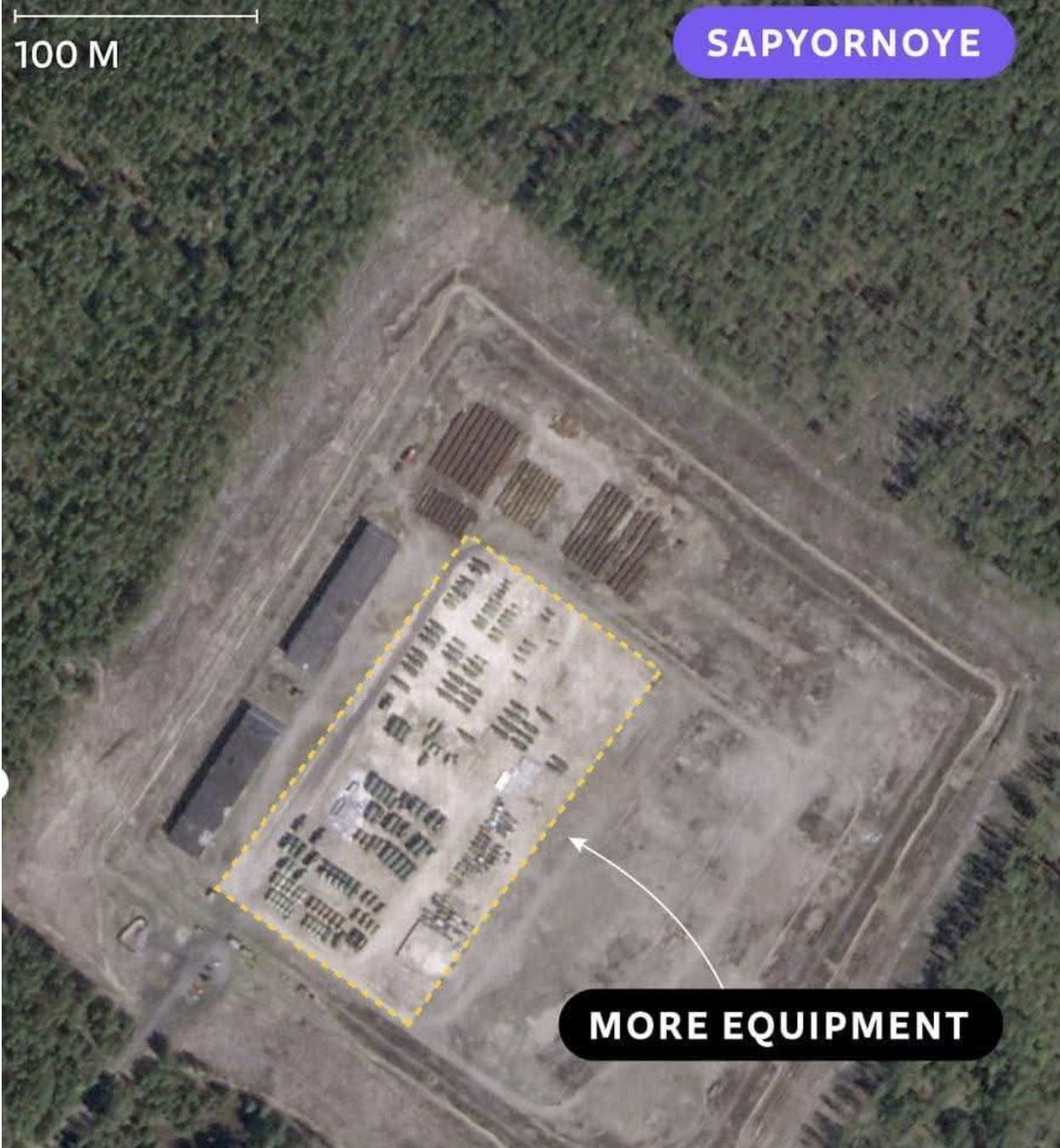
Source: An anonymous Threads account Kassandra
The photograph shows changes at the Sapyornoye garrison on the Karelian Isthmus, located about 70 kilometers from the border with Finland. The same image was published last year on the website of Finnish broadcaster Yle in an article about activity at Russian military facilities near the Finnish border.
Additionally, there is no confirmation of the claim that a force of up to 80,000 troops is stationed near the Baltic States’ borders. In late August, the Latvian Chief of Defense stated that there has been no increase in the presence of Russian or Belarusian armed forces near the Latvian border. The Institute for the Study of War has also observed no indications of a buildup of Russian forces in areas adjacent to the Baltic States. Before Russia’s full-scale invasion of Ukraine, satellites detected preparations by Russia, and intelligence agencies warned of an increase in troops, weapons, and equipment near the Ukrainian border. Currently, there are no signs of similar large-scale activity near the borders of the Baltic States.
*The term “Pribaltika” came into widespread use during the Soviet era. Since Lithuania, Latvia, and Estonia regained their independence, the term is no longer used in official terminology. Its use can be compared to using the name “Belorussia” instead of “Belarus.” While “Belorussia” is still used in Russian, it does not match the country’s official name and may be seen as outdated. The term “Pribaltika” is only used in direct quotes in this article. The editorial team uses the term “Baltic States” throughout the rest of the text.