


The hotel complex in Krasnaya Polyana, which is likely to be Lukashenko’s first foreign private residence, was not commissioned on schedule. As of the end of 2025, the construction was still considered unfinished. The developer, Komplex-Invest, initiated legal action against two contractors and was itself listed as the defendant in the case of unpaid debt. The company’s management also acknowledgedin its financial statements that sanctions and the geopolitical situation create significant uncertainty for its future work.
The article was produced with the support of the Rabochy Ruch and the Community of Railway Workers of Belarus initiatives.
A chalet on paper, a construction site in reality
In October 2025, the BIC revealed the financiers of an elite hotel complex under construction in Krasnaya Polyana, which is believed to be Aleksandr Lukashenko’s first foreign private residence abroad. Then, the journalists discovered that the developer was Komplex-Invest, a Russian company created specifically for this project. Construction and commissioning were planned for completion by the end of 2025. [*] [*]
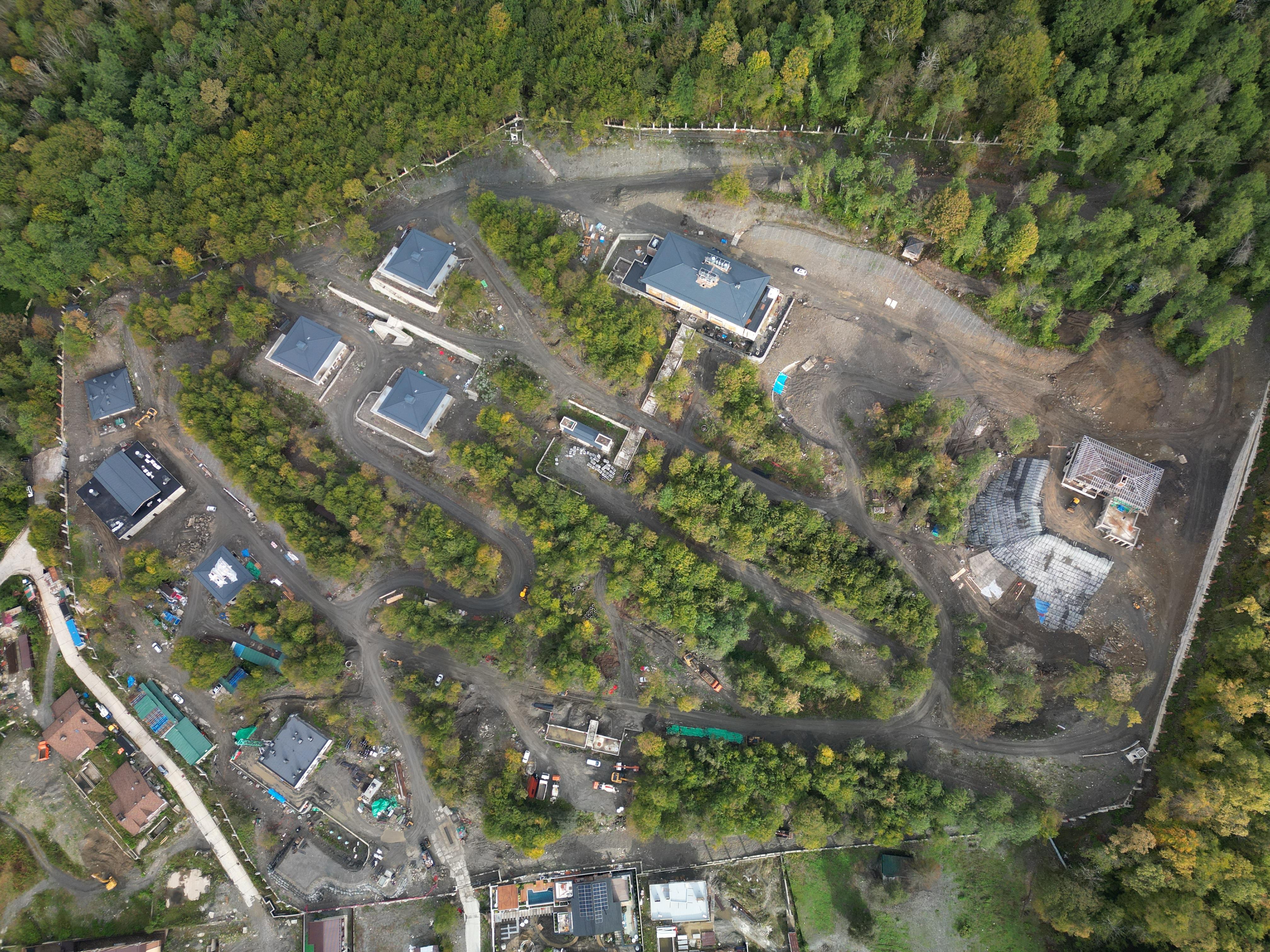
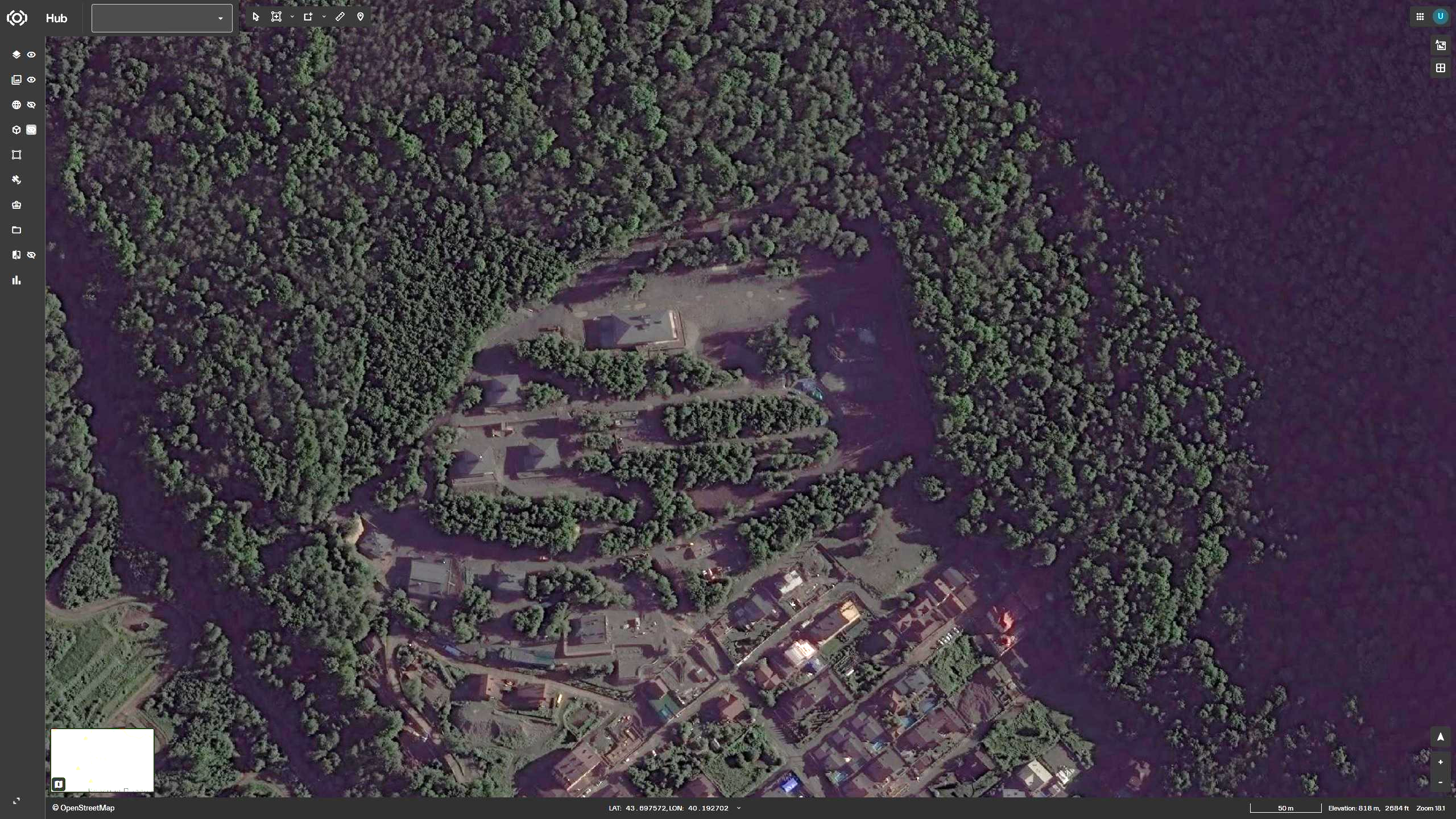
The BIC compared a satellite image of the complex taken in June 2026 with drone photos of the facility taken in October 2025. The new image does not reveal any significant changes except for the completed roof covering on the easternmost building. Paths between the buildings have still not been laid, the sports ground included in the plan is missing, and construction machinery remains parked in several places. [*] [*]
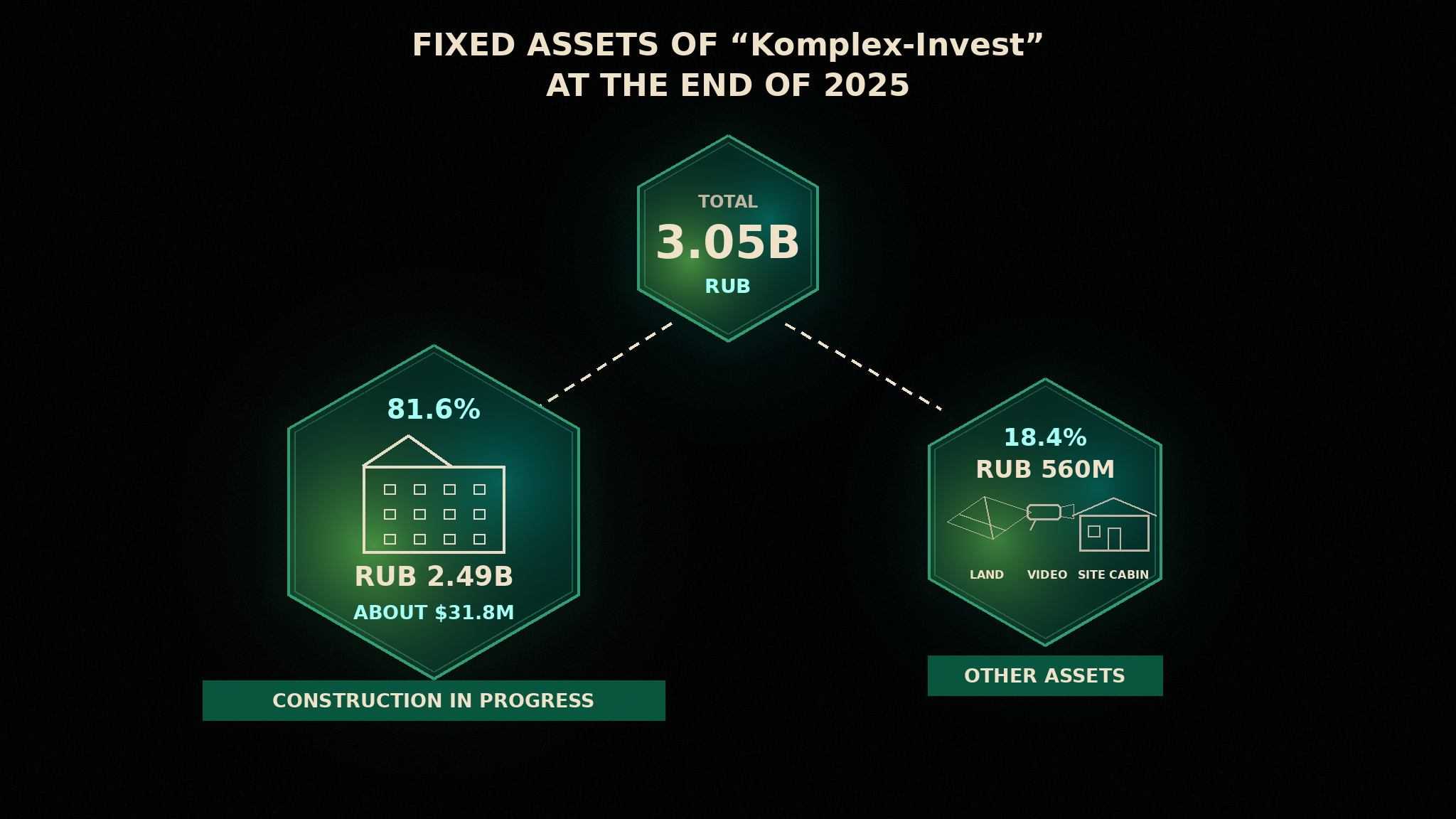
The work was not completed, despite another $12.3 million being invested in the construction in 2025. This is evidenced by new financial documents obtained by the BIC. According to the documents, as of the end of 2025, Komplex-Invest’s fixed assets were valued at 3.05 billion Russian rubles (about $39 million). This includes real estate, equipment, vehicles, and other property used in the company’s operations. Of that amount, around 560 million rubles (approximately $7.16 million) was made up of other assets, such as the plot of land, a video surveillance system and a construction trailer. The remaining 2.49 billion rubles — equivalent to approximately $32 million at the end-of-year exchange rate in 2025 — was attributable to the construction in progress at the hotel complex.
Behind the scaffold
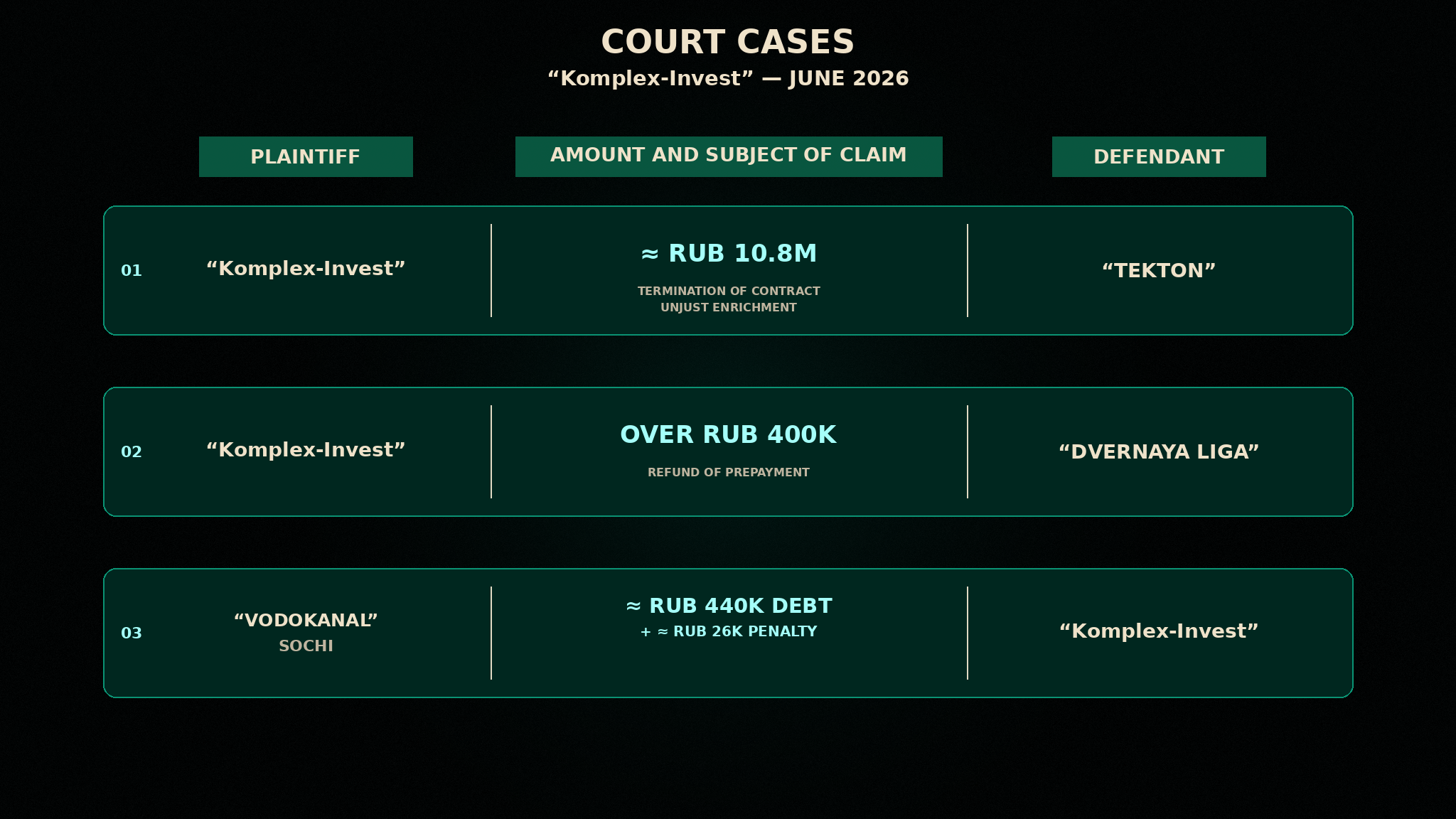
In June 2026, the Moscow Arbitration Court accepted for consideration two claims filed by Komplex-Invest against two Russian companies. Tekton, the first of the two companies, is involved in constructing hotel and residential complexes, churches, and industrial facilities.
The developer is seeking [*] [*] to terminate the contract and recover 10.8 million Russian rubles (approximately $151,000) from it, as unjust enrichment, presumably referring to an advance payment.
The court documents do not indicate which specific contract was involved, what work the contractor performed, or at which site the dispute arose. However, a representative of Tekton, whom a BIC journalist contacted while posing as an employee of a project design firm researching the construction market, said that the case concerns the complex in Krasnaya Polyana.
“It was a scam scheme there from the very beginning. <...> The customer does not want to accept any KS forms [the Russian forms of reporting documentation on the volume and cost of construction work performed — ed. note] — nothing. In other words, the customer did not want to cooperate from the beginning. It sucks them dry and basically casts them aside. Moreover, we have done much more [work] there, yet they do not want to accept what they paid in advance for. So, basically the company has been dishonest from the beginning.”
The BIC was unable to confirm independently the claims regarding the intentional nature of Komplex-Invest’s actions. However, court documents confirm that a conflict existed between the developer and the contractor. When asked if similar problems had arisen with other contractors, the Tekton representative answered in the affirmative.

The second lawsuit involves Dvernaya Liga, a company that sells doors and gates. Komplex-Invest is seeking [*] [*] [*] the recovery of more than 400,000 rubles (approximately $5,500). The dispute concerns the refund of an advance payment under a contract for supply and installation services. To find out the details, a BIC journalist posed as an employee of a company intending to work with Komplex-Invest and spoke with a contractor representative.
“We see that you have an ongoing legal dispute with them. We would like to check them as a potential counterparty. Could you share what the matter is? Is this a problematic customer?” the journalist asked.
“You should probably look into their financial history. In my opinion, they are very problematic. They had everything delivered and installed, and then they filed a lawsuit. I don’t know if this is their usual practice, because we’re not the only ones they have a legal dispute with. We completed our work on time and in full. <...> I don’t know; maybe they’re decent with others, but they’ve behaved very improperly toward us. They communicate in this very distinctive, interesting way — you know, ultimatum-like. In our opinion, they are completely wrong. That’s why we didn’t settle the matter amicably, even though we’ve never had a legal dispute with anyone before,” the interlocutor said.
“We read that this is, shall we say, an unusual client with certain ties to Belarus.”
“Yes, that’s right. That’s the position they take when dealing with these matters.”
The BIC was unable to verify the interlocutor’s claims through other sources. However, we know that the Komplex-Invest company is de facto managed by Lukashenko’s closest associate, Viktar Sheiman.
On August 11, 2026, the Moscow Court of Arbitration denied Komplex-Invest’s claim for a refund of the advance payment for goods supplied by Dvernaya Liga.
The court found that the fire doors at issue had been installed at the customer’s facility and that their specifications matched the commercial offer agreed upon by the parties. Komplex-Invest has until September 7 to appeal the decision.
The problems go beyond contractors
At the same time that Komplex-Invest filed lawsuits against its contractors, the company itself became a defendant in a debt case. On June 26, 2026, the Krasnodar Krai's Arbitration Court accepted [*] [*] for consideration a claim filed by the municipal enterprise Vodokanal of the city of Sochi. The company is seeking to recover about 440,000 Russian rubles ($5,800) in debt from the developer for January 2026, plus more than 26,000 rubles ($347) in late-payment penalties.
Information regarding the organizations referenced in the investigation
In this article, Komplex-Invest refers to Komplex-Invest LLC, registered in Russia (identification number: 7730265490).
In this article, Tekton refers to OOO Tekton, registered in Russia (identification number: 7743251494).
In this article, Dvernaya Liga refers to OOO Dvernaya Liga, registered in Russia (identification number: 2311167630).
In this article, Vodokanal of the city of Sochi refers to the MUP g.SOCHI "Vodokanal" registered in Russia (identification number: 2320242443).
The company is facing other challenges in addition to missed deadlines, lawsuits with contractors, and a lawsuit for debt. This is evident in Komplex-Invest’s own assessment of the situation. The company’s 2025 reporting documents, signed by its director, state that the geopolitical situation, sanctions against Russia, and Russian counter-sanctions have a significant impact on its operations. According to the company’s management, these factors create uncertainty and significant doubt about the company’s ability to continue as a going concern. The company had no business activities other than the construction of the complex in Krasnaya Polyana.
The BIC sent questions to Komplex-Invest and its contractors, as well as to Vodokanal of the city of Sochi. As of publication, no responses had been received.


![[*]](/storage/page_blocks/August2026/13.png)
![[*]](/storage/page_blocks/August2026/23.png)
![[*]](/storage/page_blocks/August2026/31.JPG)
![[*]](/storage/page_blocks/August2026/41.JPG)
![[*]](/storage/page_blocks/August2026/7.1 1.png)
![[*]](/storage/page_blocks/August2026/7.21.png)
![[*]](/storage/page_blocks/August2026/8.11.png)
![[*]](/storage/page_blocks/August2026/8.21.png)
![[*]](/storage/page_blocks/August2026/8.31.png)
![[*]](/storage/page_blocks/August2026/9.11.png)
![[*]](/storage/page_blocks/August2026/9.21.png)