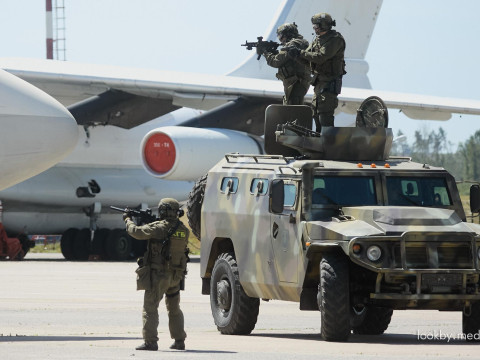

Context: Lithuania and Poland are preparing a joint evacuation plan for residents of the Baltic States in the event of a major crisis or military threat. Vilmantas Vitkauskas, head of Lithuania’s National Crisis Management Center, announced this on 25 September 2026. The plan is to evacuate people to Poland via the Suwałki Corridor, an approximately 100-kilometer stretch of the Polish-Lithuanian border which connects the Baltic States to the rest of NATO and the European Union.
On September 27, 2026, CTV’s Novosti 24 Chasa news program reported:
“Vilnius has joined the ranks of European capitals with the fastest-rising public transportation fares. A recent study found that the cost of public transport passes in the city has increased by over 10% in the past three years. The cost of a short trip has increased from 65 cents to one euro. City officials cite inflation and tax increases as the reasons behind this move. In reality, however, officials simply shifted the burden of rising costs onto ordinary city residents.”
The cost of a short trip in Vilnius has indeed increased, rising from 65 cents to one euro. This fare has been in effect since July 1, 2025. But the price increase alone does not make Vilnius one of the leaders in price growth.
Greenpeace compared the cost of long-term public transport tickets in 30 European capitals from 2023 to 2026. In Vilnius, prices rose by approximately 10%. Over the same period, long-term public transport ticket prices rose in 14 of the studied capitals, fell in four, and remained unchanged in the rest. Among these 14 cities, Vilnius ranked tenth in terms of the rate of price increase. The leaders included Nicosia, Amsterdam, Madrid, Bratislava, Berlin, and Vienna.
In other words, although prices in Vilnius did rise, the study’s data do not support classifying it among capitals with the fastest-rising public transport ticket prices.
For comparison, the price of a single-ride ticket and a monthly pass in Minsk has risen by nearly 30% over three years.